MacIntyre, Aesthetics, and the Critique of (neo-)Liberalism
[Start time is in UTC: Click here for the start time in your local time zone.]
This event will be held on Zoom: Click here to access the meeting.
An online event featuring two presentations:
MacIntyre and the Aesthetic Critique of Liberalism
Michael O’Neill, Associate Professor of Philosophy, Providence College
Informed by recent work on the moral and aesthetic implications of MacIntyre’s theory of practices and narrative in After Virtue and Ethics in the Conflicts of Modernity, I plan to situate this work, and MacIntyre’s AV and ECM, within a tradition of aesthetic critiques of liberalism. With reference to Nietzsche and Umberto Eco, I argue that MacIntyre's theory of practices and narrative can function as the basis for principles of aesthetics that may function to help reform community life within neoliberalism.
Locating the Invisible Man: Determining Visibility and Values in Luc Tuymans’ Der Architekt
Simon Willems, Lecturer in Art, University of Reading
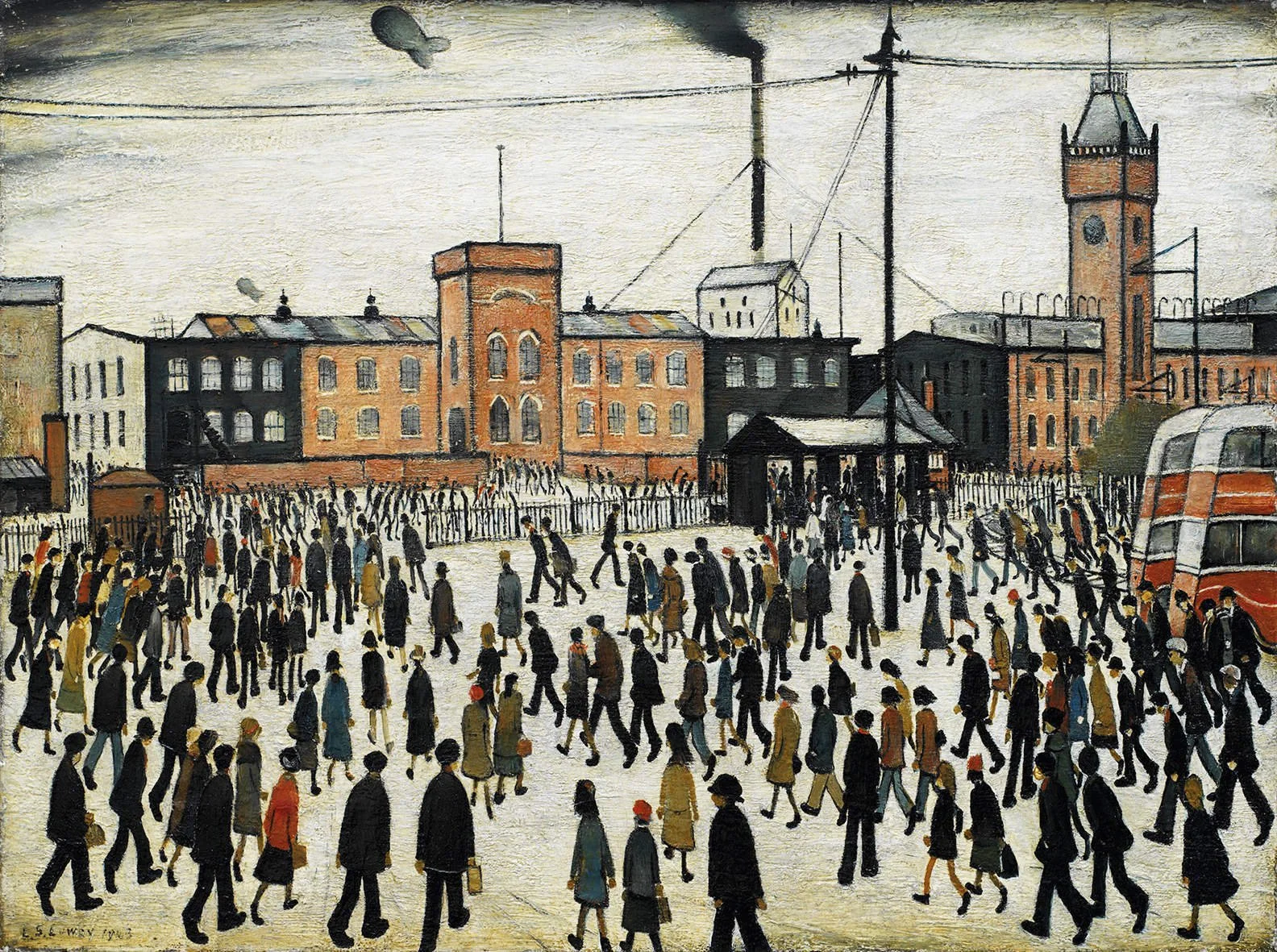
Alasdair MacIntyre’s characterisation of the emotivist manager hinges on the assumption that bureaucrats are ‘necessarily’ Weberian. MacIntyre’s argument stems from the claim that the realm of facts, means, and measurable effectiveness, forecloses the possibility of values. Yet MacIntyre’s characterisation is rooted in the Fordist era of Scientific Management in which he himself grew up. In this paper, I consider how the portrait of Albert Speer Der Architekt (1997-1998) by the Belgian painter Luc Tuymans, allows us to reassess MacIntyre’s claims. Sourced from home movie footage of Speer with his wife on a skiing holiday, Tuymans’ painting shows the Nazi minister turning towards the camera lens, having collapsed on a bed of snow. Speaking to the ‘humanistic’ principles of management which underpinned his leadership style, Speer appeals to the viewer through a veil of recognised vulnerability; flagging up the question of visibility where Tuymans deploys a mask, screening out Speer’s expression. In situating Tuymans ‘distrust of the image’, Der Architekt reframes Speer, revising MacIntyre’s thesis whilst deepening its contours; anticipating the move towards ‘human’ values that informed the ‘cultural turn’ in management thinking in the 1980s.
Neo-Aristotelian Ethical Naturalism and its Proponents
[Start time is in UTC: Click here for the start time in your local time zone.]
This event will be held on Zoom: Click here to access the meeting.
An online event featuring three presentations:
Narrative Ethics and Ethical Naturalism
Evgenia Mylonaki, Assistant professor of Practical Philosophy at the Philosophy Department of the University of Patras, Greece
In this talk I aim to bring in notions from Alasdair MacIntyre’s work together with notions from Philippa Foot’s work. In particular, I want to see what sense we can make of the idea of a life-cycle as itself a kind of narrative and of the phases of life as revisions of this narrative.
Connecting Animal and Rational Nature: Midgley as a Critique of Foot
Ellie Robson, Teaching Associate at Nottingham University, and Postdoctoral Fellow at the British Society for the History of Philosophy
In this talk, I will present the work of the Mary Midgley (1919-2018) as an early form of first generation Neo-Aristotelian Naturalism. Midgley provides a unique flavour of Neo-Aristotelian naturalism which forefronts the need for close empirical comparison between humans and non-human animals. I argue that Midgley’s conception of species’ natures poses a critique of Philippa Foot’s conception of ‘life forms’.
A Critique of Second-Generation of Neo-Aristotelian Ethical Naturalism
Tom Angier, Associate Professor at the University of Cape Town, South Africa
In this presentation, I will lay out the main claims and arguments of second-generation, neo-Aristotelian ethical naturalists. The group I have in mind – John Hacker-Wright, Micah Lott and Parisa Moosavi – build on the work of Philippa Foot and Michael Thompson, addressing its weaknesses while also proposing theoretical fortifications of their own. I shall argue that their attempted fortifications fail to overcome the weaknesses that beset the Foot/Thompson project, and that we need to return to a more robustly metaphysical – and thus more genuinely Aristotelian – conception of ethical naturalism.
Organized in collaboration with CASEP.
MacIntyre, Health Care, and Society
[Start time is in UTC: Click here for the start time in your local time zone.]
An online panel event on health care ethics featuring presentations by Peter Collins (Executive Director; Peter Collins and Associates) and Dr Omowumi Ogunyemi (Institute of Humanities, Pan-Atlantic University):
“The Role Played by Ethics in the Decision-making Process of Senior Leaders: a Study of Health Care During an Extreme Crisis”
Peter Collins
“Autobiographical Temporality and Virtuous Self-creation: Exploring Current Issues in Mental Health”
Dr Omowumi Ogunyemi